
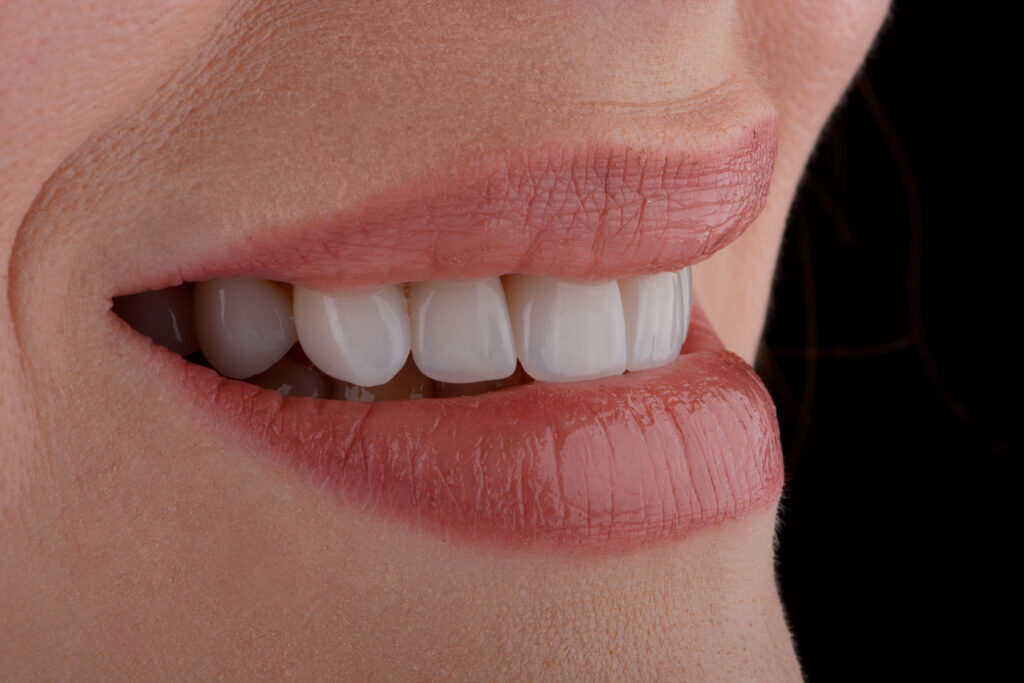
A beautiful smile is more than just straight, white teeth. When a dentist designs a smile, the entire face becomes the canvas, and facial symmetry is one of the most important reference points in the process. From the position of your pupils to the curve of your lips, every feature plays a role in determining what kind of smile will look most natural and balanced on your unique face. Understanding the relationship between facial symmetry and smile design can help you better appreciate why cosmetic dental treatment is as much an art as it is a science.
At North Creek Dental Care, our doctors take a comprehensive, face-first approach to every smile makeover. Rather than simply improving individual teeth in isolation, we analyze the full picture of your facial structure to create results that look intentional, harmonious, and genuinely natural. Our trusted, caring team walks through how facial symmetry factors into the smile design process and what it means for your treatment.
What Facial Symmetry Actually Means in Dentistry
Facial symmetry in smile design does not mean your face needs to be perfectly identical on both sides. In reality, no face is perfectly symmetrical, and that is completely normal. Instead, we evaluate the degree of balance between the left and right sides of your face and how the dental composition aligns with your facial proportions.
Clinicians use specific reference lines to guide their analysis. Horizontal reference lines, such as the interpupillary line (the line running between your pupils), help establish whether your teeth and gingival tissue are level. The vertical reference line, which runs through the center of the face from the forehead through the nose and chin, helps determine where the dental midline should fall. According to research published by the National Institutes of Health on digital smile design and facial symmetry, these facial landmarks are foundational to creating a smile that integrates naturally with the rest of the face.
How Symmetry Guides Key Smile Design Decisions
Achieving a balanced smile goes beyond straightening teeth or improving their color. Understanding the relationship between your facial features and dental structure is what allows our team to create results that look natural and proportionate.
The Dental Midline
One of the first things a dentist evaluates is whether your dental midline, the space between your two upper front teeth, aligns with the center of your face. A midline that is noticeably off-center can create visual tension and make your smile look unbalanced, even when the teeth themselves are in good shape. Correcting or accounting for midline discrepancies is a foundational step in cosmetic dentistry treatment planning.
Tooth Proportions and Width
Facial width and structure directly influence how wide or narrow a smile should appear. Teeth that are too narrow for a patient’s face can look timid or out of proportion, while teeth that are too wide can look artificial. We use facial measurements to determine appropriate tooth width, ensuring the smile fills the frame of the face correctly. This is especially relevant when designing restorations like porcelain veneers, where the shape and size of each tooth is carefully chosen to complement your facial dimensions.
The Gingival Line
The heights of the gum tissue around each tooth also factor into facial symmetry. Ideally, the gum levels around the upper central incisors should mirror each other, and the overall gum line should follow a predictable, balanced pattern. Uneven gum tissue can disrupt the symmetry of a smile just as much as misshapen or discolored teeth. In some cases, gum recontouring is recommended as part of a broader smile design plan to bring the gingival line into balance.
When Perfect Symmetry Is Not the Goal
Here is something many patients find surprising: skilled smile designers often intentionally build in subtle asymmetry to make a smile look more natural. The lateral incisors, the teeth on either side of the two front teeth, are frequently made slightly less uniform than the central incisors. This “dynamic symmetry,” where both sides are balanced but not identical, gives the smile a sense of individuality and vitality that an overly uniform result can lack.
The goal of smile design is not to create a mathematically perfect smile but to create one that looks like it belongs to you. Treatments like professional teeth whitening can enhance your smile’s brightness, while restorative and cosmetic procedures address shape, size, and alignment, all guided by the symmetry and proportions of your face.
Smile Design at North Creek Dental Care
At North Creek Dental Care, our doctors bring decades of combined experience to every smile design case. Our team takes the time to conduct a thorough facial and dental analysis before recommending any treatment, ensuring that every procedure is planned with your overall facial harmony in mind. We offer a full range of cosmetic and restorative services and are proud to have been recognized as a top dental office in the greater Frankfort, Illinois area.
If you are considering a smile transformation and want a team that treats your whole face, not just your teeth, we encourage you to get in touch. Whether your goals are subtle or dramatic, our approach prioritizes results that look natural, feel comfortable, and complement who you are. Contact us today to schedule your smile design consultation.
What Our Patients Are Saying

Medically Reviewed By
The content on this site is medically reviewed by the experienced dental professionals at North Creek Dental Care in Tinley Park, IL. Led by Dr. Sharon L. Linder, DDS, and Dr. Bradley A. Engel, DDS, our team brings decades of combined clinical experience in general, cosmetic, and restorative dentistry. Every article reflects our commitment to evidence-based care, patient education, and the highest standards in oral health.
- Fact Checked
- Editor


